How to Address Your Wedding Invitation Envelopes
A complete guide to etiquette, style, and modern personalization.
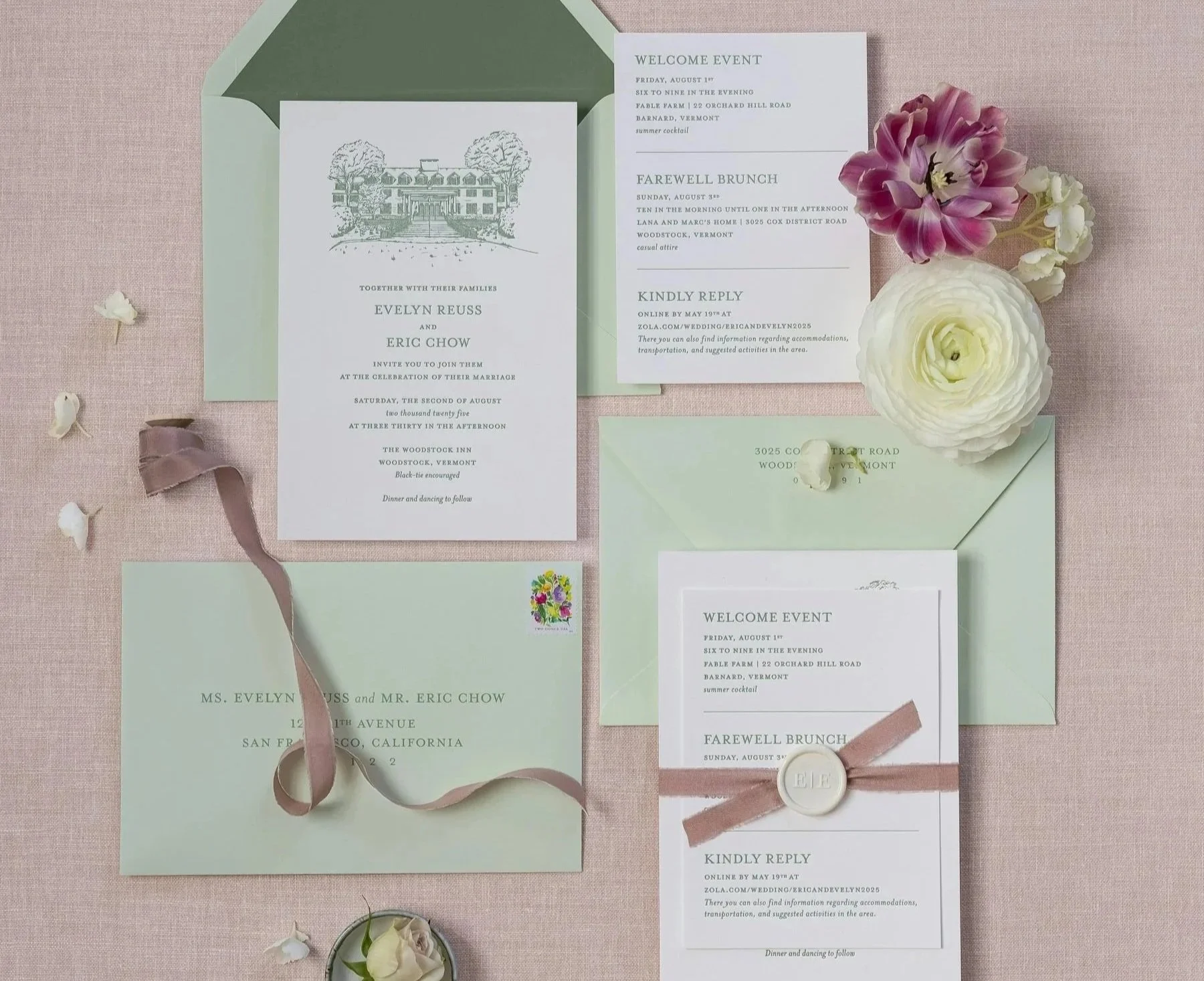
Addressing your wedding invitation envelopes is an important finishing touch that helps set the tone for your wedding. Using a consistent format ensures each invitation leaves a polished first impression for your guests.
The guidelines below follow traditional etiquette, but remember there’s room for personalization. Feel free to adapt these conventions in a way that feels natural to you as a couple.
General Formatting Tips
Invitee and Guest
If an invitee is bringing a guest, this should be noted on the envelope. Whenever possible, we recommend listing the guest by name (for example: Mr. Tom Smith and Ms. Fiona Todd). If the guest’s name is unknown, you may simply write “and Guest” after the invitee’s name.
Multiple Guests Who Live Together
If multiple adult invitees live at the same address (such as roommates), each person should receive their own invitation.
Children
Children under the age of 18 should be included on their parents’ invitations. Their names should appear on the line below the parents’ names. Children over 18 who still live at home should receive their own invitation.
Address Details
Spell out address elements such as street, road, and avenue. It is important to try to avoid abbreviations. Cities and states should also be written out (for example: Shelburne, Vermont). The only exception is Washington, D.C., which traditionally remains abbreviated.
Apartment or unit numbers should be placed on a separate line beneath the street address. Additionally, numbers under ten should be spelled out rather than written numerically.
Female Titles
For girls under the age of 18, use “Miss” before their name. Unmarried women over 18 should be addressed as “Ms.”
Male Titles
For boys under the age of 18, use “Master” before their name. Once a male turns 18, the appropriate title becomes “Mr.”
Professional Titles
Professional titles should be spelled out in full to maintain formality and consistency. For example, use “Doctor” rather than “Dr.”
Guest Addressing Examples
Single Man
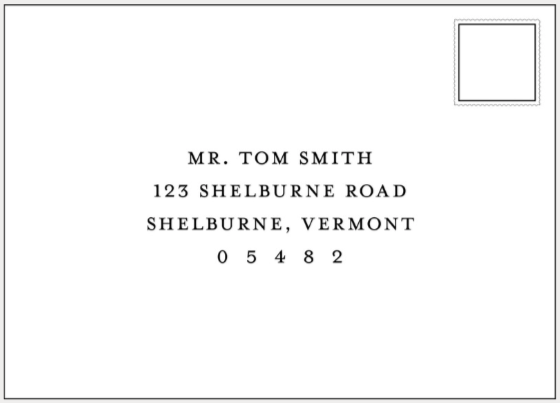
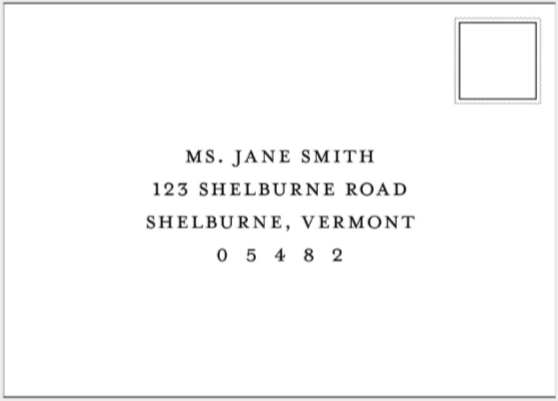
Single Women
Single Man or Women with a Guest
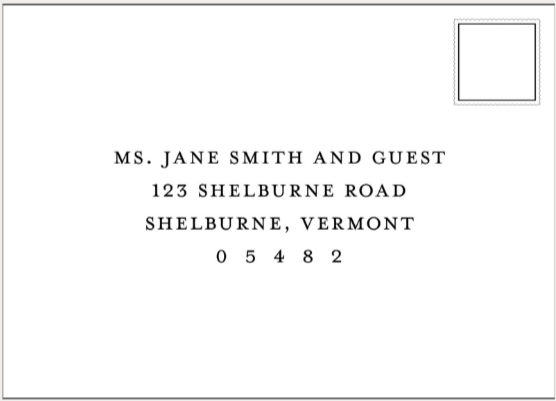
While it’s perfectly acceptable to simply write “and Guest,” we recommend including the guest’s name whenever possible. Listing both names provides clarity and ensures your invitation feels personal and intentional.
Unmarried Couple that Lives Together

Married Couple with the Same Last Name
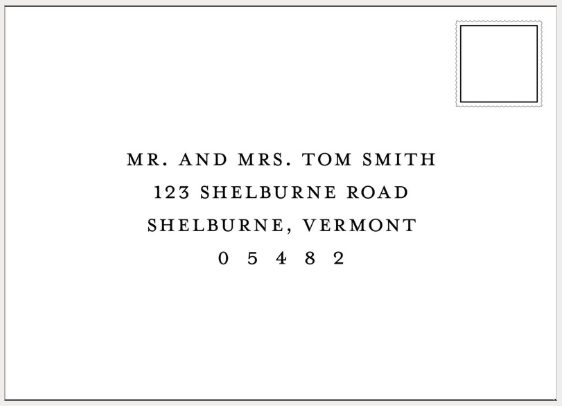
For a more modern and balanced approach, we recommend listing both first names. For example: “Mr. and Mrs. Tom and Jane Smith.”
For same-sex couples, list both names as well. For example: “Mr. Todd and Mr. Craig Long” or “Mrs. Abigail and Mrs. Addison West.”
Married Couple with Different Last Names
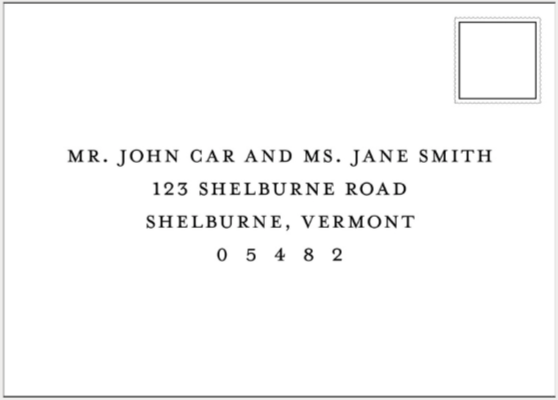
Married Couple with Children Under 18
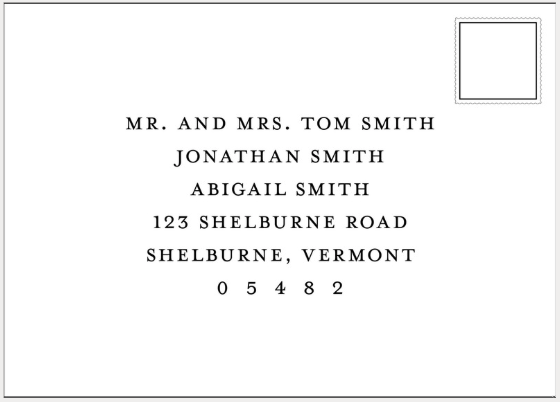
For children under 18, we recommend listing each child’s name individually on their own line beneath the parents’ names. If the entire household is invited, you may also address the envelope to the family as a whole. For example: “The Smith Family.”
Married Couple, Husband has a Professional Title
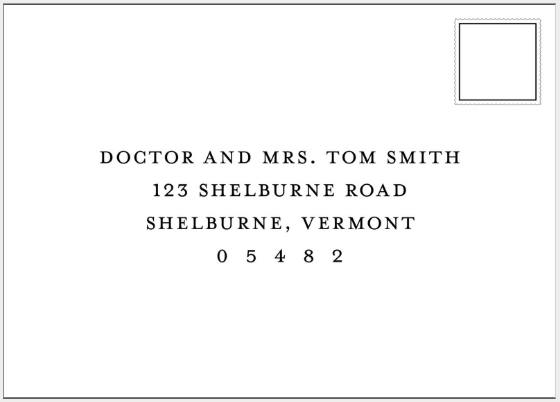
These rules apply to doctors, judges, and commissioned officers.
Married Couple, Wife has a Professional Title
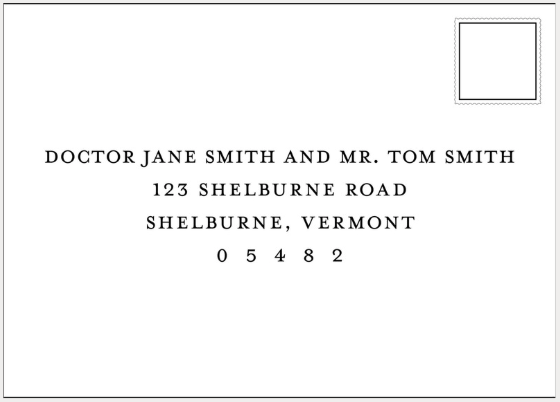
These rules apply to doctors, judges, and commissioned officers.
Married Couple, Both have Professional Titles
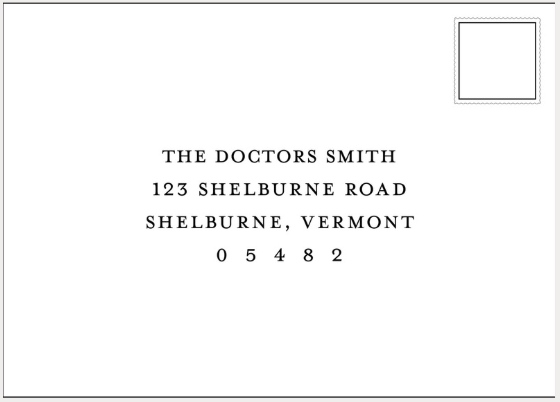
These guidelines apply to doctors, judges, and commissioned officers. If both partners hold professional or military titles, list each title accordingly. For example: Colonel Tom Smith and Captain Jane Smith.
Widow
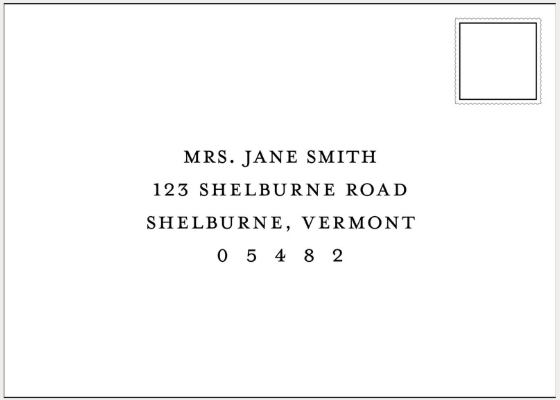
Widows are traditionally addressed using their late husband’s name: Mrs. John Smith.
However, a modern alternative is to use her own name: Mrs. Jane Smith.
Thank You!
We hope this guide helps you feel confident when addressing your wedding invitations. As always, the RH Design team is here to help if you need a little guidance along the way.