Decoding Different Stationery Print Methods
A guide to understanding digital, letterpress, foil, and beyond.
When you begin designing your wedding invitations, one of the first decisions you’ll make is how you want them printed. Understanding different printing methods is important so you can set the tone for your wedding while staying within your budget.
Below, the RH Design team will be breaking down the most common printing methods to aid you on what might be best for your wedding planning journey.
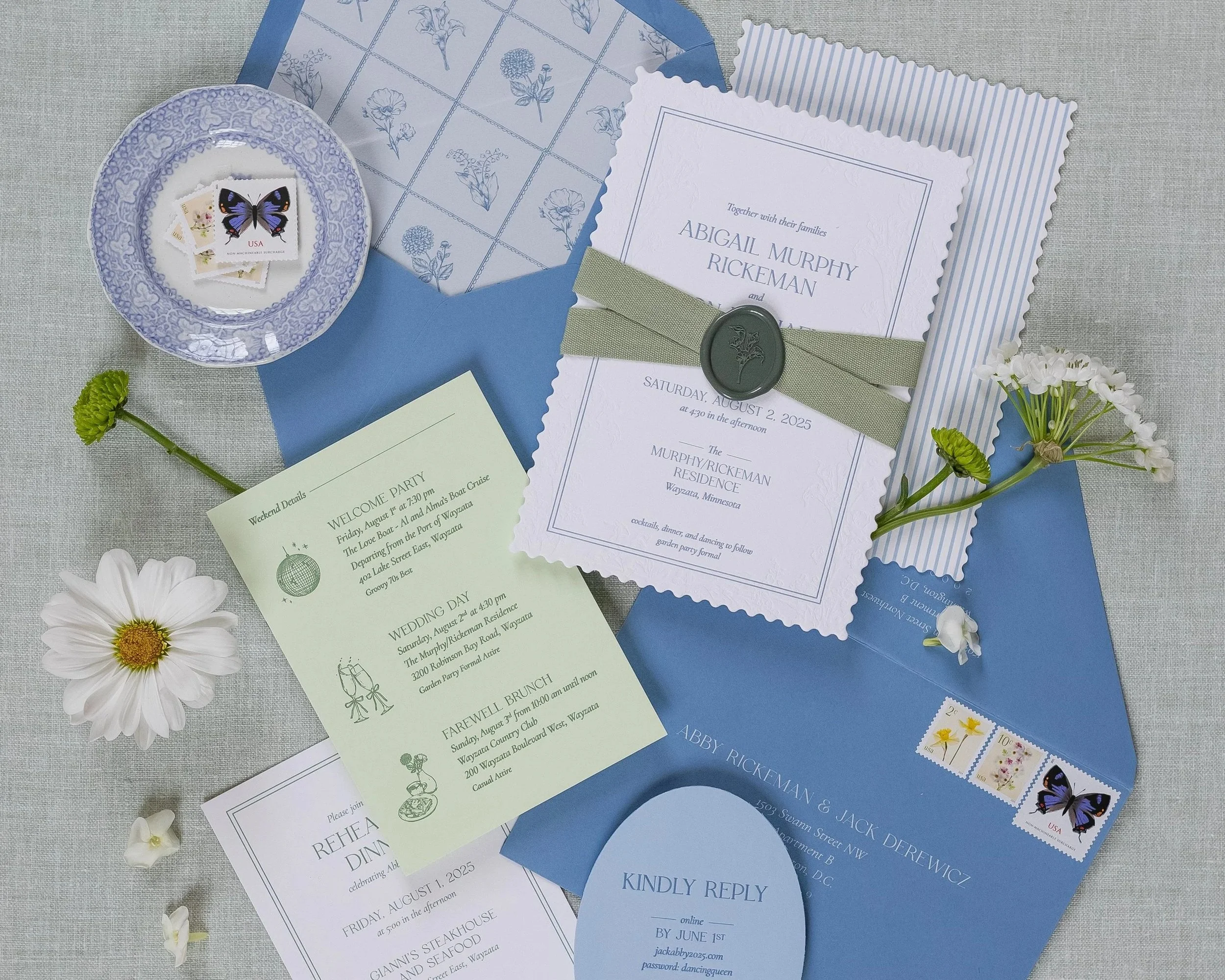
Digital Printing
Crisp, colorful, and endlessly versatile.
Digital printing - also known as flat printing is the most modern and accessible print method available. It functions much like a high-end inkjet printer, making it perfect for full-color artwork, watercolor illustrations, photography, and other designs rich in detail.
One of the biggest advantages of digital printing is its flexibility: you can incorporate as many colors as you’d like without affecting the cost. Unlike letterpress, foil, or embossing, digital printing doesn’t create any physical impression on the paper, the surface stays smooth and clean. This makes it an excellent choice for artwork or layouts that would be too intricate or cost-prohibitive with traditional techniques.
Best for: Couples looking for maximum color, detail, and flexibility at a more accessible price point.
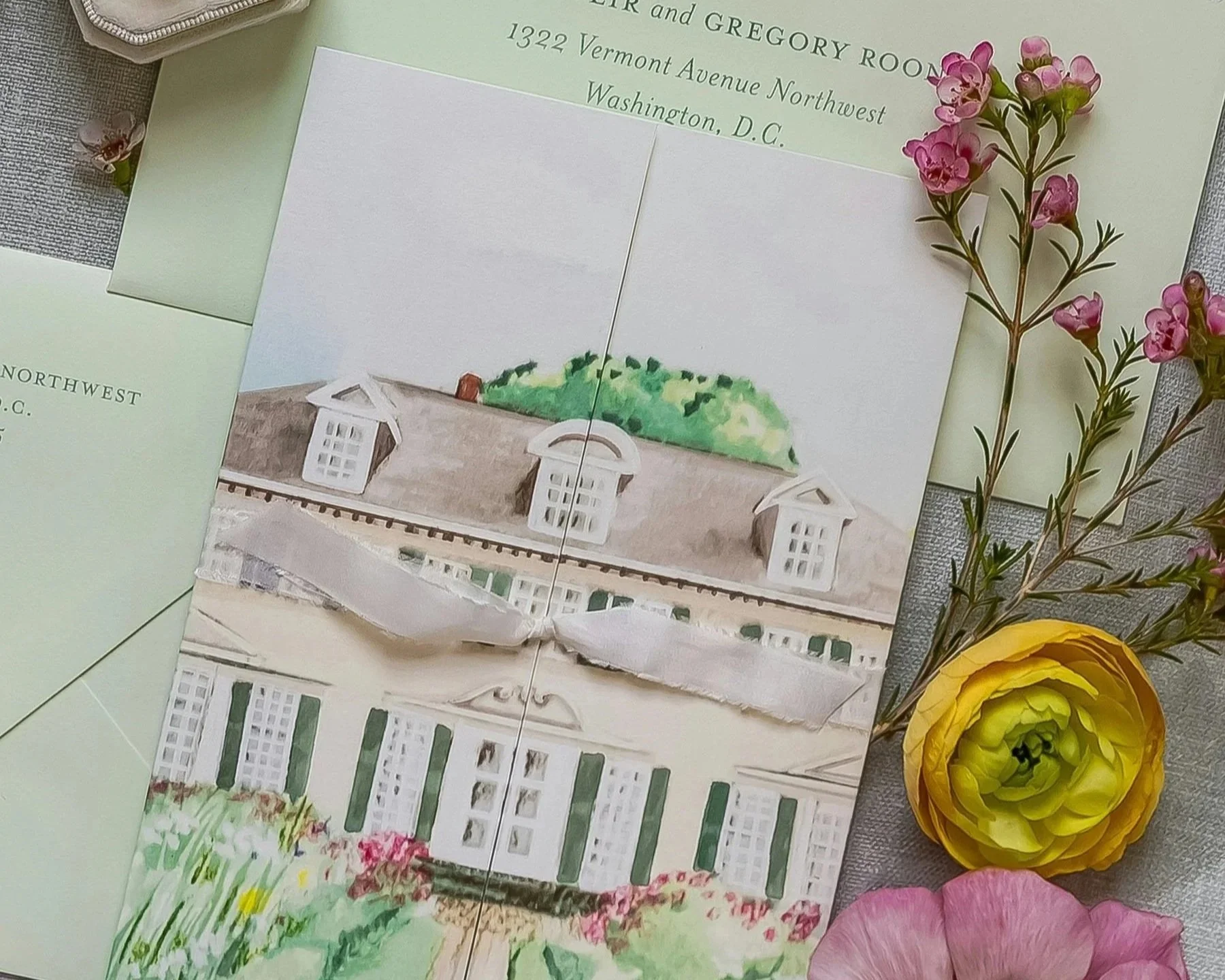
Pairs well with: Watercolor illustrations, venue sketches, floral artwork, and patterned envelope liners.
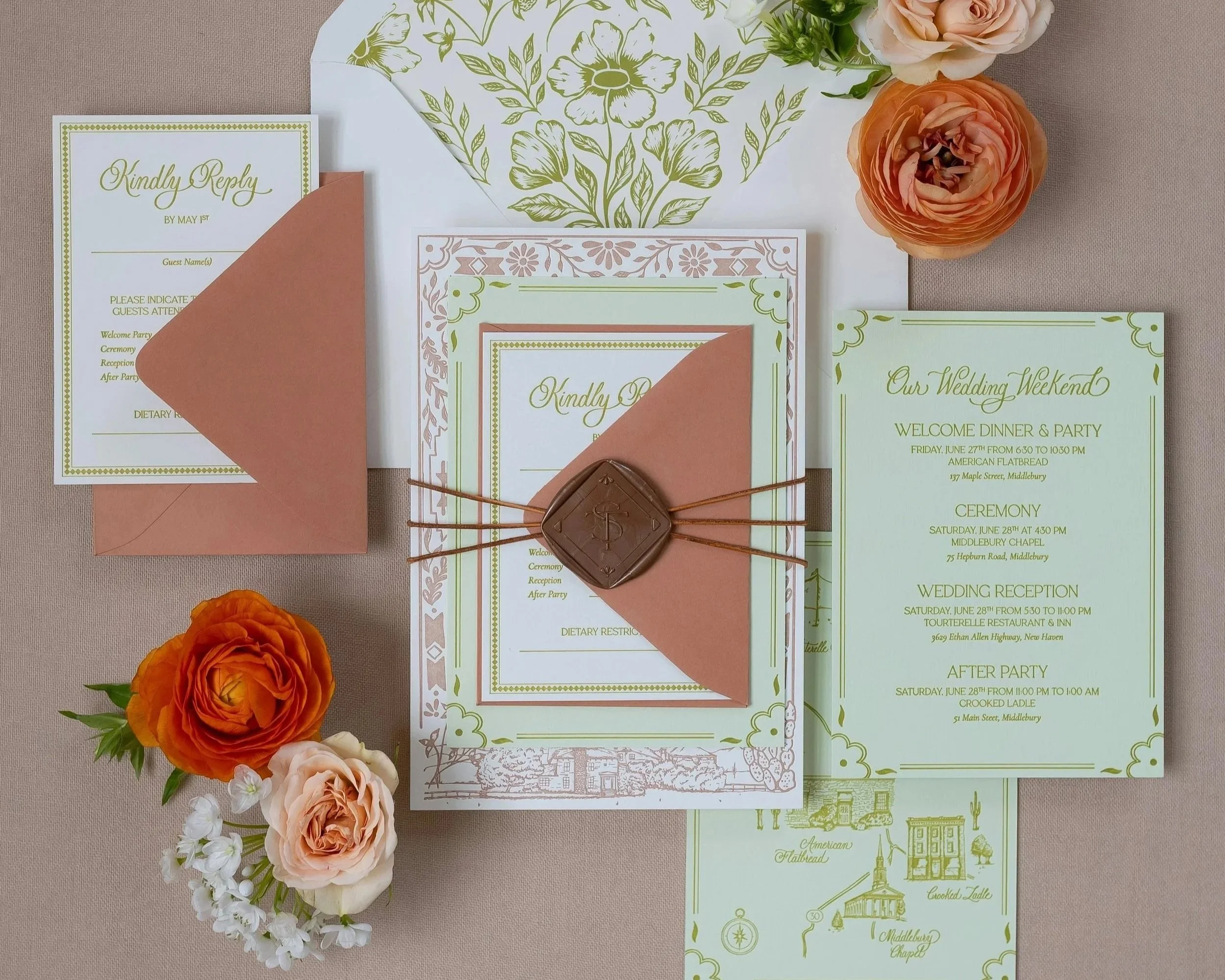
Letterpress Printing
Timeless, tactile, and beautifully imperfect.
Letterpress involves pressing inked text or artwork into paper using a metal plate and heavy pressure. Instead of laying ink on top of the surface (as digital printing does), letterpress impresses the design into the paper, leaving a deep, pillowy impression you can both see and feel.
Every color in your design is printed separately, using its own custom metal plate. A helpful detail to keep in mind: additional ink colors increase both the number of plates and the production time, which naturally affects cost. For the most beautiful and cost-efficient results, we typically recommend choosing one or two signature ink colors.
Best for: Couples who love texture, craftsmanship, and understated elegance.
Pairs well with: Minimalist or classic layouts.
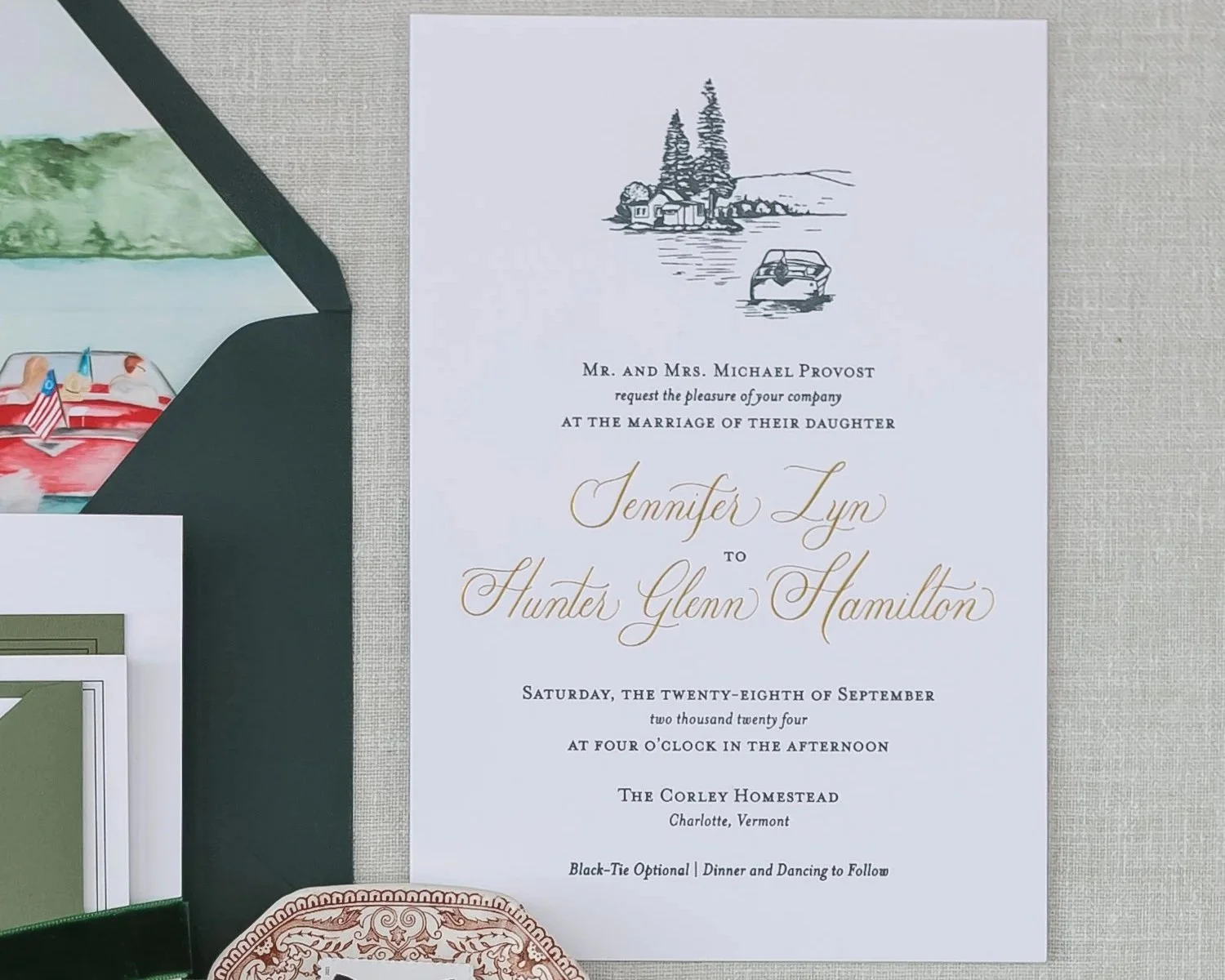
Foil Stamping
Shine, sophistication, and high contrast.
Foil stamping uses heat and pressure to press metallic or pigmented foil onto the paper. The result is a luminous finish that catches the light perfect for adding a touch of glamour or contrast.
Foil can be used on its own or combined with letterpress or digital printing for a layered, mixed-media effect. Metallic foils like gold, silver, and copper are classics, but modern options also include matte, white, and even holographic foils.
Best for: Couples drawn to luxury finishes and modern elegance.
Pairs well with: Dark or colored paper stocks, monograms, and minimalist typography.
Embossing
Texture, tone, and quiet sophistication.
Embossing is a print technique that creates a raised impression on paper: the opposite of letterpress printing. Using two custom metal plates, the paper is pressed between them under heat and pressure, lifting the design upward. Like letterpress, embossing is a method you can both see and feel, but with an elevated, dimensional effect.
No ink is required, though embossing can be combined with foil stamping or ink for added contrast and shine. The result is a subtle, refined finish that’s perfect for monograms, borders, or pattern details. Embossed elements can stand alone for a tone-on-tone effect or be paired with foil for extra depth and luminosity.
Best for: Couples who appreciate minimalist texture and elegant understatement.
Pairs well with: Cotton or handmade paper, blind impressions, and metallic accents.
Debossing
Depth, detail, and modern refinement.
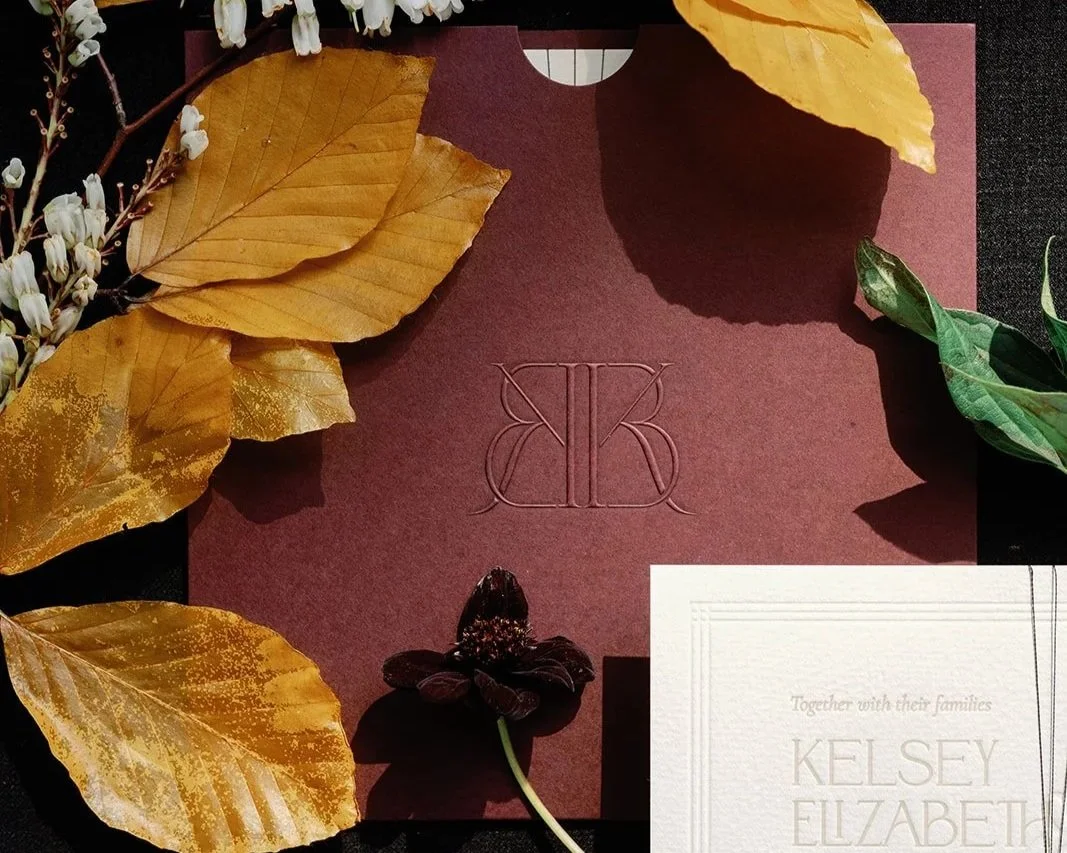
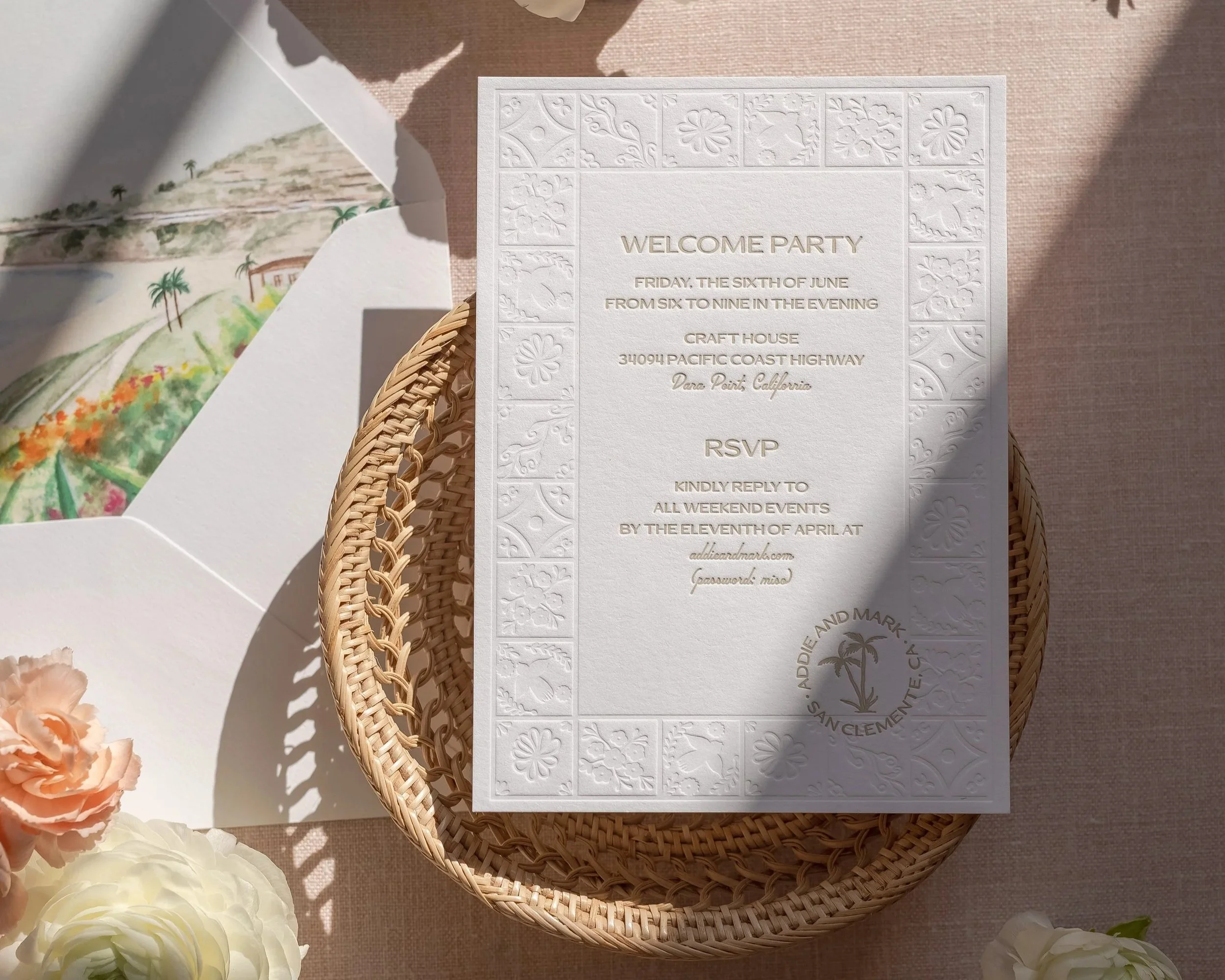
Debossing is a print technique that presses a design down into the paper, creating a recessed impression (the opposite of embossing). Using a custom metal plate, the paper is pushed inward under heat and pressure, leaving a clean, indentation you can see and feel.
This method doesn’t require ink, making it ideal for subtle, tone-on-tone texture. When paired with ink or foil, debossing adds striking dimension and contrast without overwhelming the design. It’s a beautiful way to highlight monograms, borders, crests, and minimal illustrations.
Best for: Couples who love modern minimalism and sculptural texture.
Pairs well with: Thick cotton paper, letterpress printing, foil stamping, and elegant layouts.
Sculpted Embossing
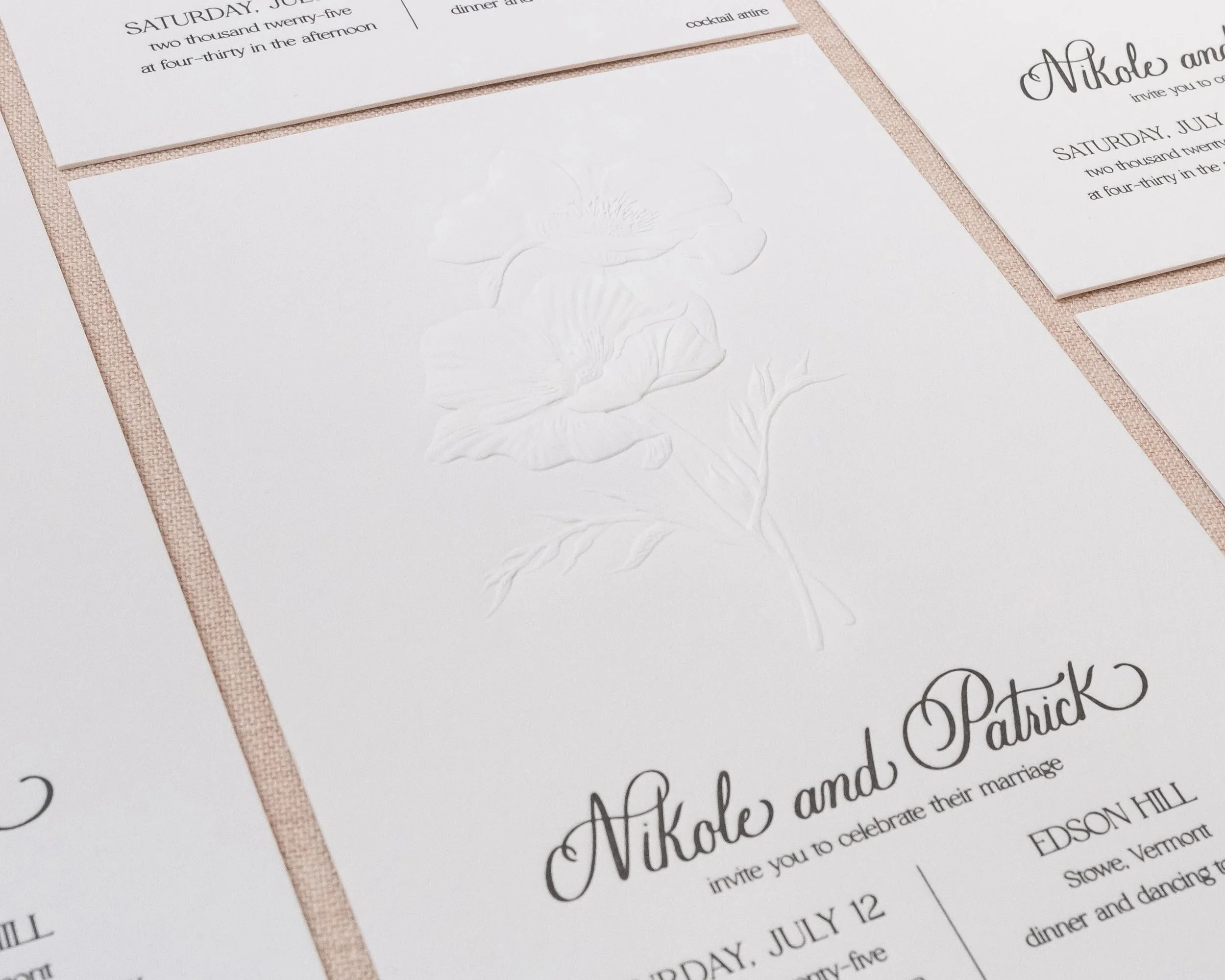
Sculpted embossing is the most intricate form of embossing. It uses a multi-level metal plate to create a raised, three-dimensional design with contour and depth that feels almost hand-sculpted. The result is rich, tactile, and beautifully refined.
Best for: Monograms, crests, botanical motifs, or venue illustrations.
Pairs well with: Letterpress printing, foil stamping, and minimal layouts.
Thank you!
At RH Design House, we will guide you through every material and print decision to ensure your invitations don’t just look beautiful, but feel truly unforgettable.